An Ecology of Gullah Geechee
Memory Along the Coast
IV. Community & Resistance
It is important to be aware of the many threats to Gullah/Geechee culture.
However, it is equally, if not more important to highlight examples of community resilience, resistance and self-determination.
For it is in these stories of resilience that we are most likely to find inspiration.
Inspiration to learn, to organize, and to work to meet the needs we see in our own communities and the communities of others.
Speaker Map
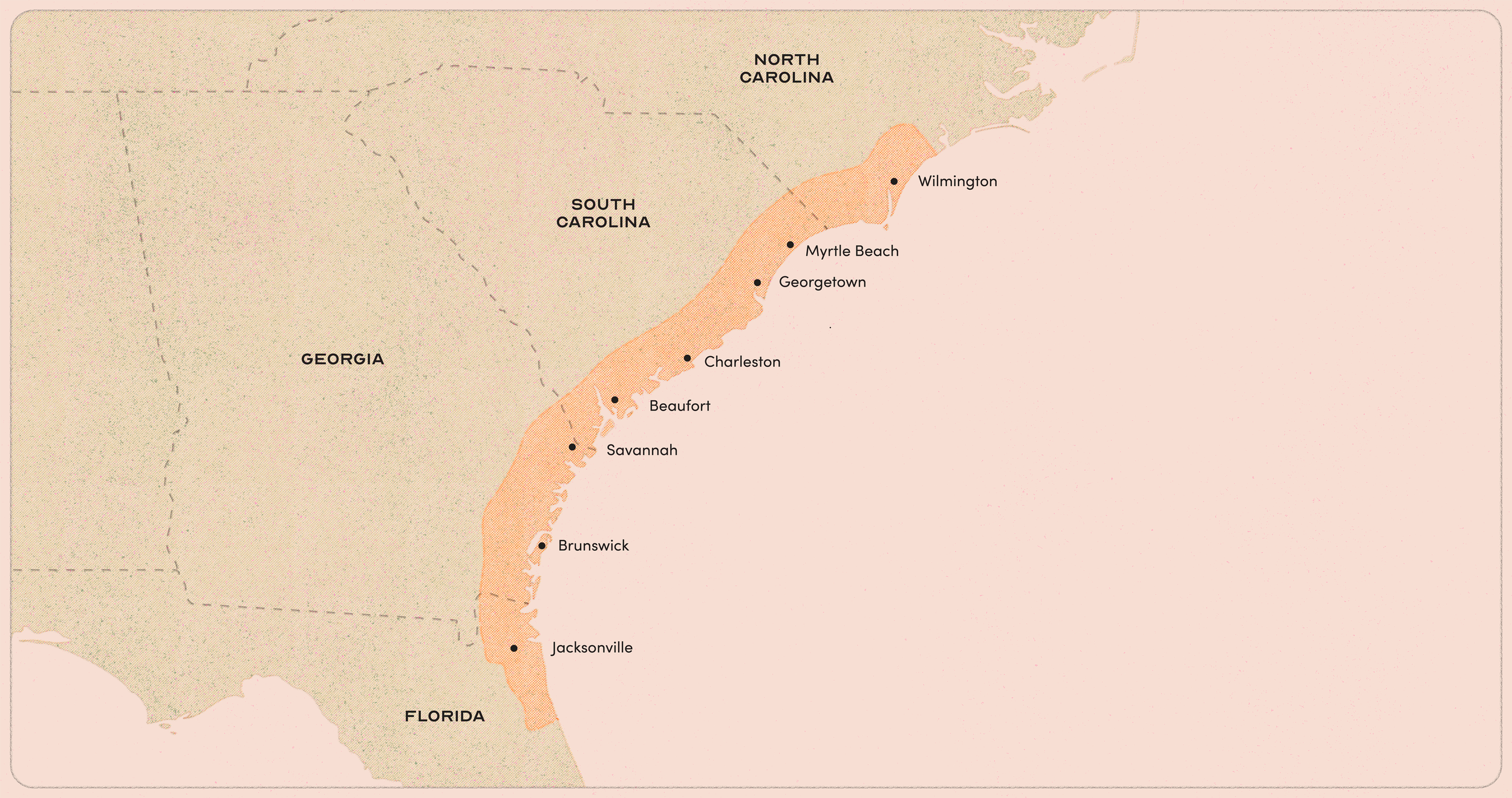
Hover & Click the speaker’s name to explore their story.
Griffin Lotson — St. Simons Island, GA
Mahoganee & André Amigér — Walterboro, SC
Tia Clark — Charleston, SC
-
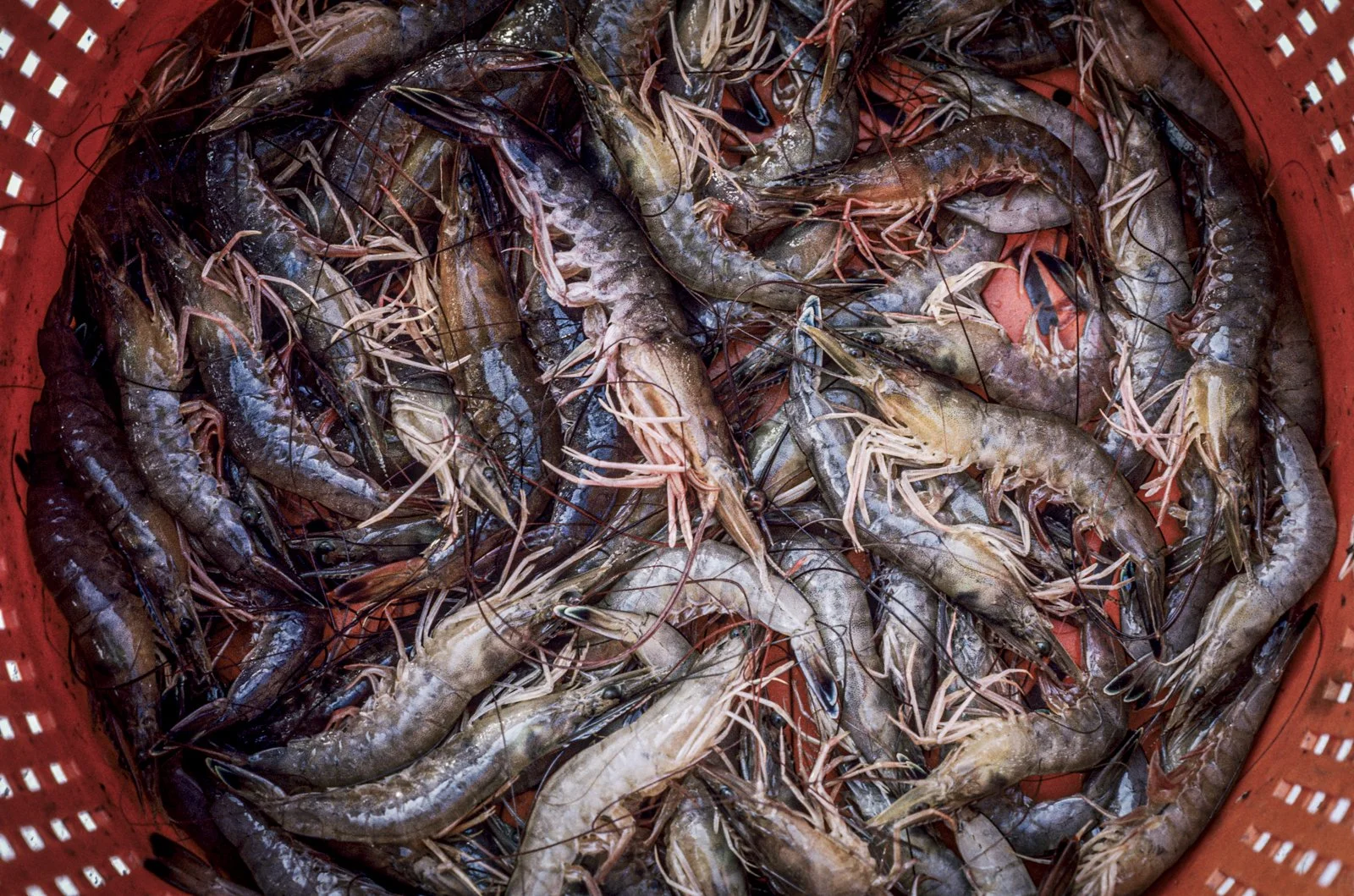
Food from the Water
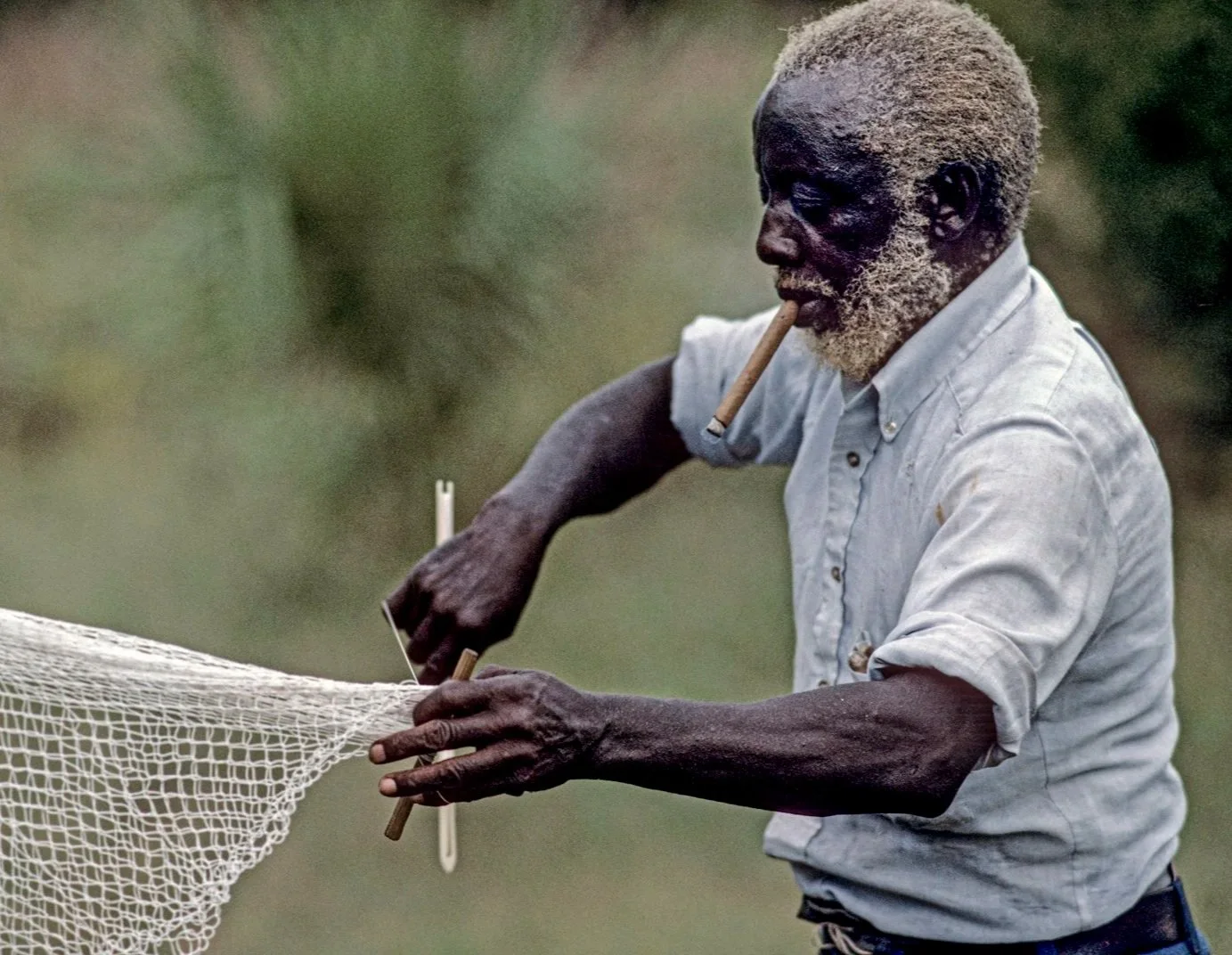
“I was eating everything from the water. We eat a bunch of crabs and that's just the way it goes. I learned through my journey that us eating out of that water goes really as far back as enslaved days. When they were given rations, they weren't given enough to feed their family. So going to the edge of the water and handlining in some crabs and throwing the cast net or fishing was a way to supplement and get food.”
-
Distanced from Language and Culture
“But I was headed down what I thought was the right path for me before 37. In hindsight, that was the worst path for me and that was built and stemmed from the way that I was growing up. My mom was raised in the heart of downtown Charleston, right outside of Marion Square.
I knew that we had Gullah Geechee. I knew my culture was Gullah Geechee. I knew my family spoke a lot of Geechee, but I wasn't allowed to speak Geechee growing up. And so for me, every time I would try to be with my family, be with my cousins, speak the way they're speaking, I’d get shut down from my family, from my mom, every single time to get corrected? It just made me make the association that the culture was bad. I didn't need to be focused on being a part of this culture because my mom was steering me away from it.”
-
“And I kind of just leaned into that and kind of turned my back on my culture and lost exactly who I was as a person. It took this journey and me having this bond with this water to be able to have to sit down and have the real conversation with my mom about what that made me feel and how she then opened up and told me, “But that was me trying to protect you.”
The way that she grew up, she wanted people to take me seriously in settings and she thought that I was going to go far, so she thought that being Geechee people wouldn't take me seriously. It made me have this complete disconnect with my culture until the first time that I went crabbing.”
-
Reconnecting through Crabbing
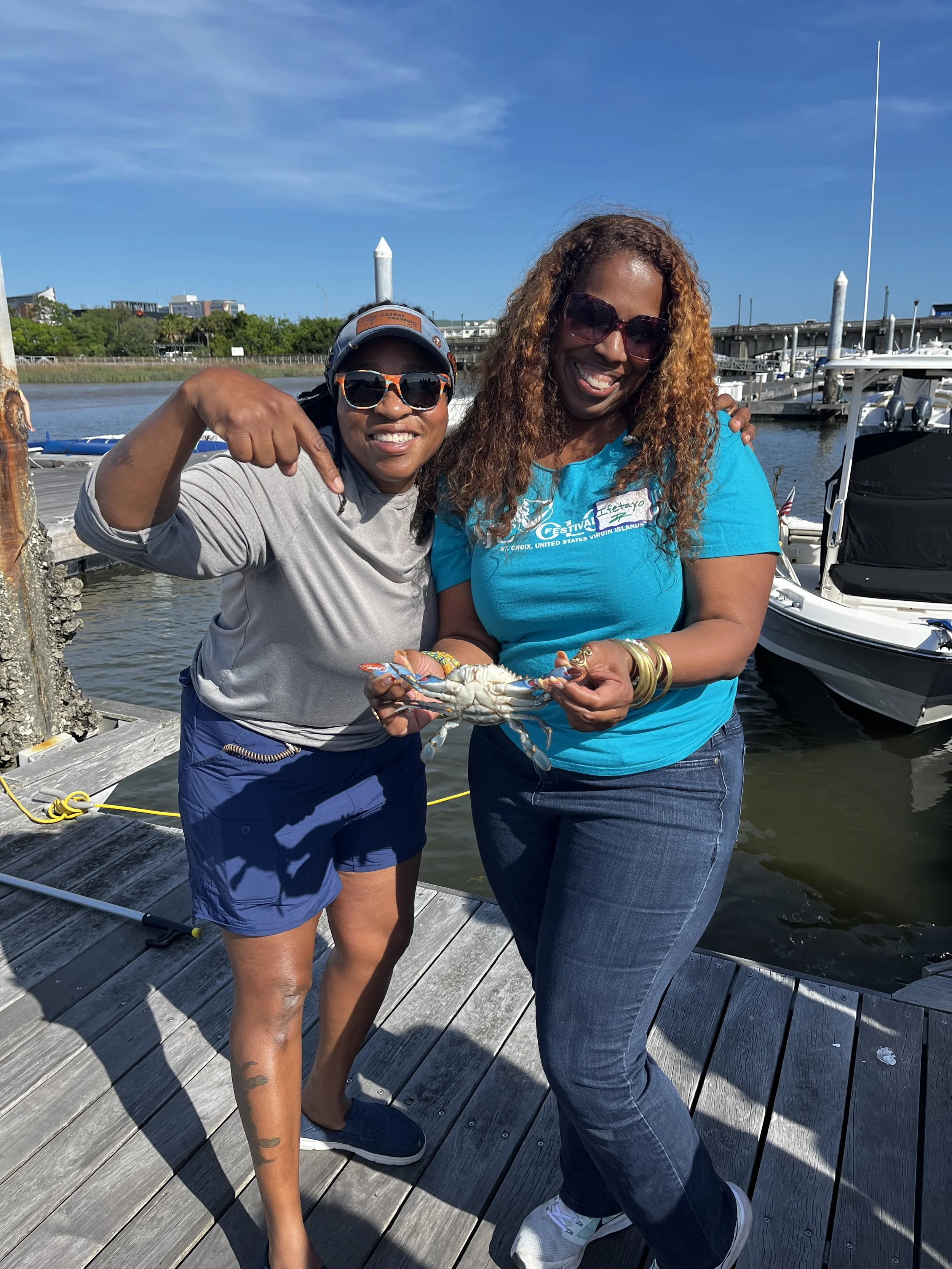
“And then when I went crabbing and I got in that water for one, yes, it was foreign for me to be catching crabs, but all of these things started connecting. I had this connection to the water already. I was just blocking it out and stamping it out and closing my back on it and me going crabbing changed all of that.
So in the past eight years is where I've gotten all the knowledge that I really have. I feel like there's so much for me to learn still.”
-
Development in Charleston
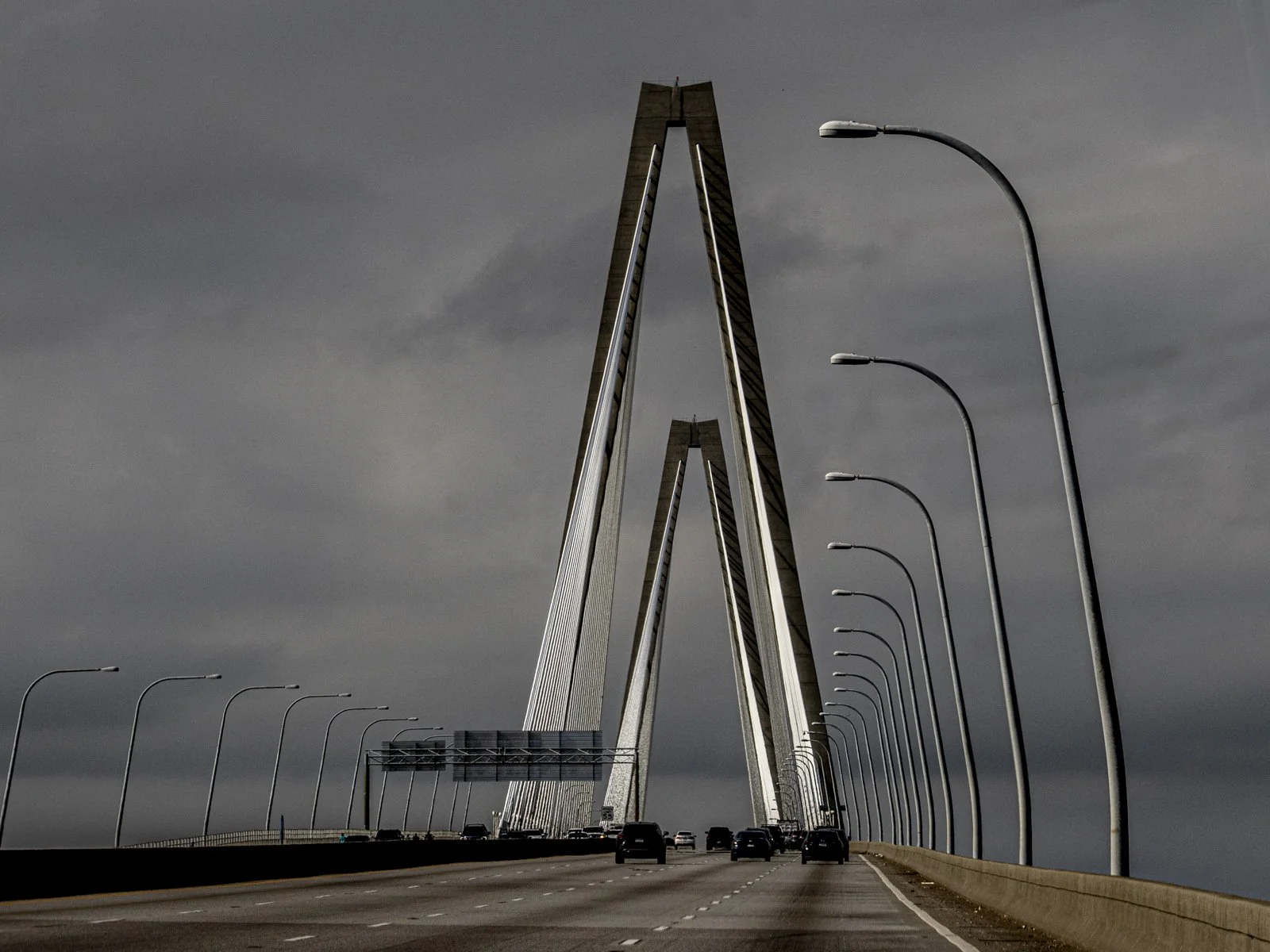
“A lot of my work is now put back into making sure that with all of this growth and development in Charleston, that our Gullah Geechee culture is not stamped out. As a local, I get so offended when I go to downtown Charleston because it doesn't look like my memories. I don't feel like the connection and stuff that I have in my head aren’t there. I believe that there has to be and there will always and needs to be growth, but you don't do it by stamping out what was there. You try to honor and include what was there.
So it's important for me, for all these come-yuhs [tourists] that come into town to come out on the dock with me so that they can learn exactly where they are, learn about the history here. You can go on these whitewashed trips and tours or whatever people want you to do, but for me, that's not the heart and soul of Charleston.”
-
Charleston's History
“Our culture built this whole place. None of this stuff—rice, indigo, cotton, plantations—none of that stuff would be here if it wasn't for our people.
And I get so offended when people go to these plantations and stuff, and then they go, ‘Come to this rose garden, come look at this.’ And I'm like, they're not talking about the real truth.”
-Tia Clark