[speaker: Leevon White]
The crabbing—you're probably familiar with the chicken back—the kids love to see that demonstration. A lot of these practices we don't use anymore. We’ve gotten away from most of those practices. Harvesting oysters—that was big in this community.
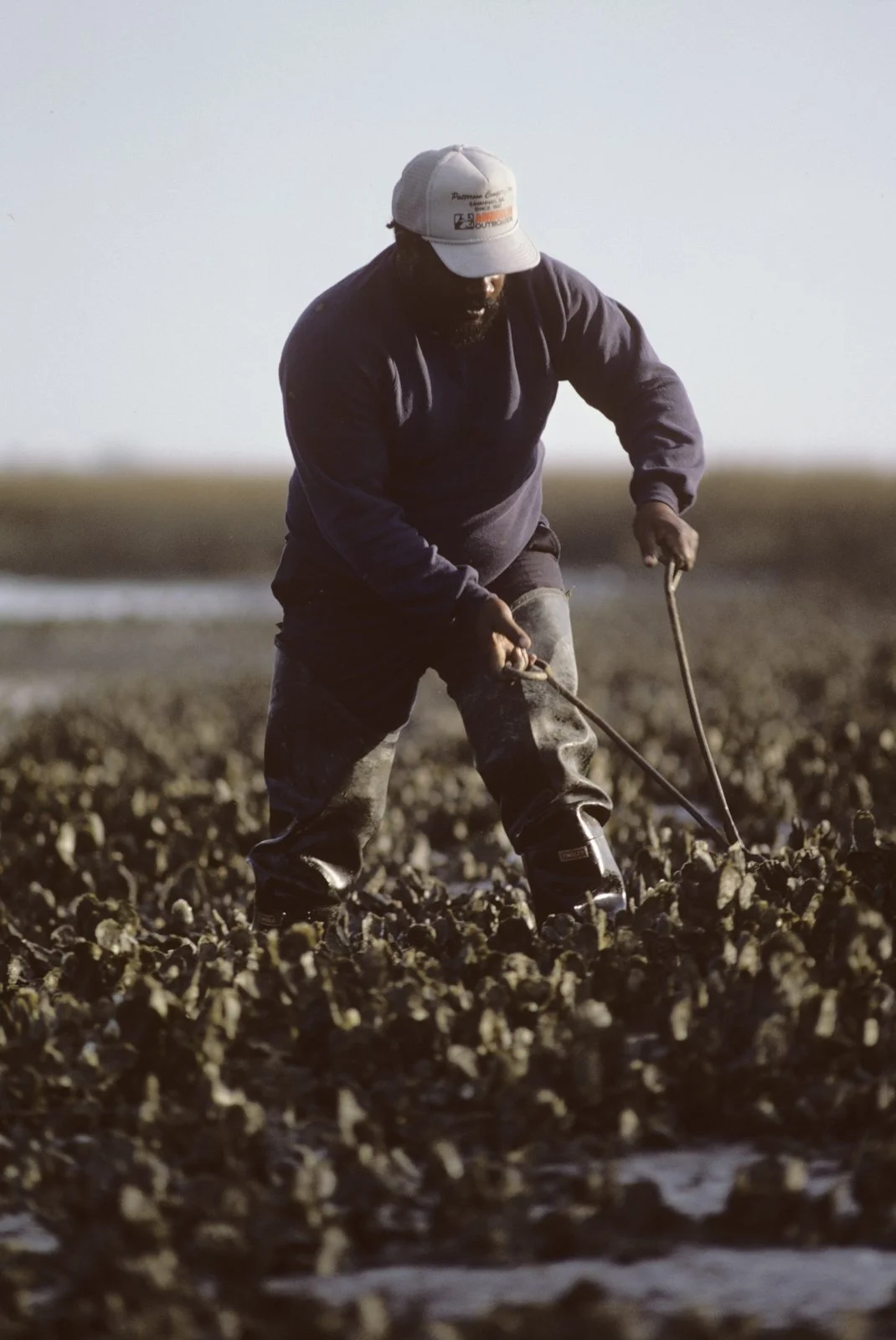
Matter of fact, there was a oyster house before. They would tell you there was the oyster house in this community, and that's all they did was harvest oysters, getting them right out in the Mill Cove/St. John's River area there. And then the jars on there—my grandfather would shuck the oysters, put the oyster in the jars, and they would take them to the local area and sell them $3 a jar.
But that was fresh oysters. Can't do those practices no more. They would fill those jars up with oysters, and they would sell those entire jars. And I mean that was labor intensive work for them to go out there and up to our waist. I went out there once before with my grandfather—up to our waist in mud, and we were actually pulling the oysters out, putting 'em in the bucket, bringing 'em back to the land.
[Speaker: Ted Johnson]
What's great here though, is it may not be the essence of internal passing on of the knowledge of the history and the culture, but we realized not just the kids, but they're fascinated, and so are their parents. So, in a way, that's a way to help the culture be preserved because more people will know about it and learn about it.